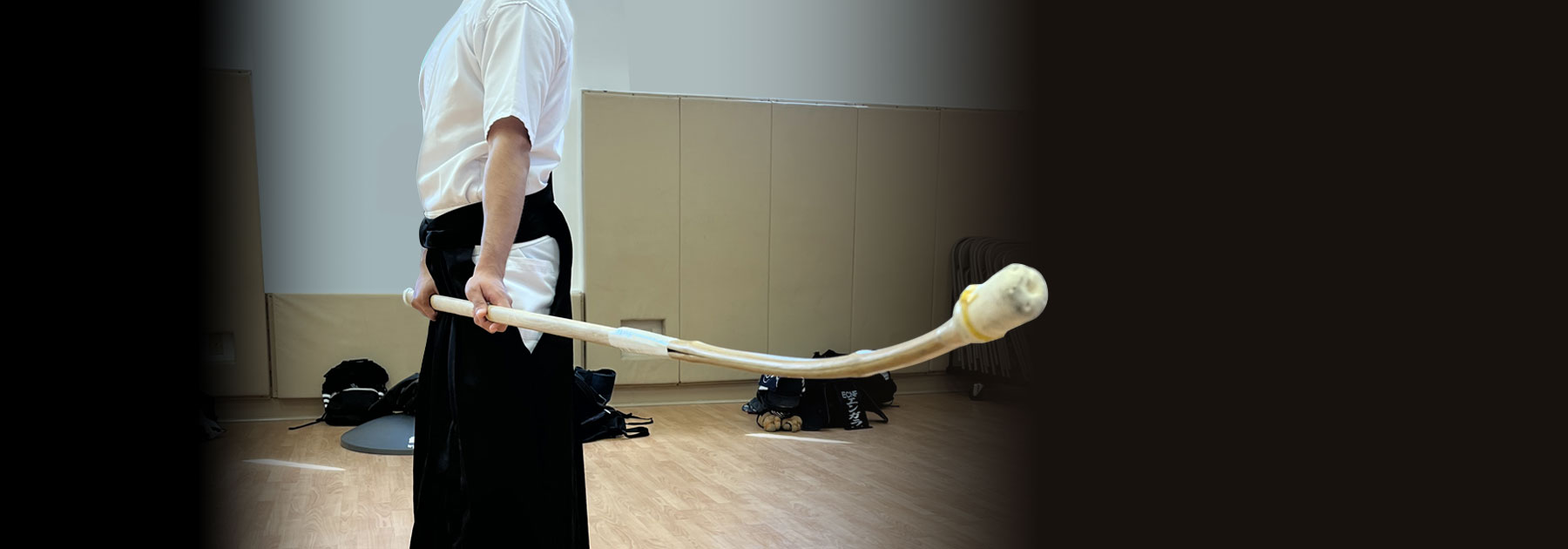
Naginata is a traditional Japanese martial art that combines elegance and power through the use of the polearm weapon known as the naginata. Once practiced by sohei, samurai and warrior women, Naginata today emphasizes fluid movement, strategic distance, and precise footwork.
Training includes solo and partner forms, helping practitioners develop focus, coordination and mutual respect.
Naginata offers a dynamic blend of combat technique and cultural refinement, making it both a martial discipline and a graceful expression of Japanese heritage.
Visitors
Please see our schedule for times and locations.
You’re welcome to come watch a class at no cost — we encourage it!
If you’d like to try an introductory session or learn more about class fees, just ask the instructor.
Contact: naginata@ny-jss.org
News
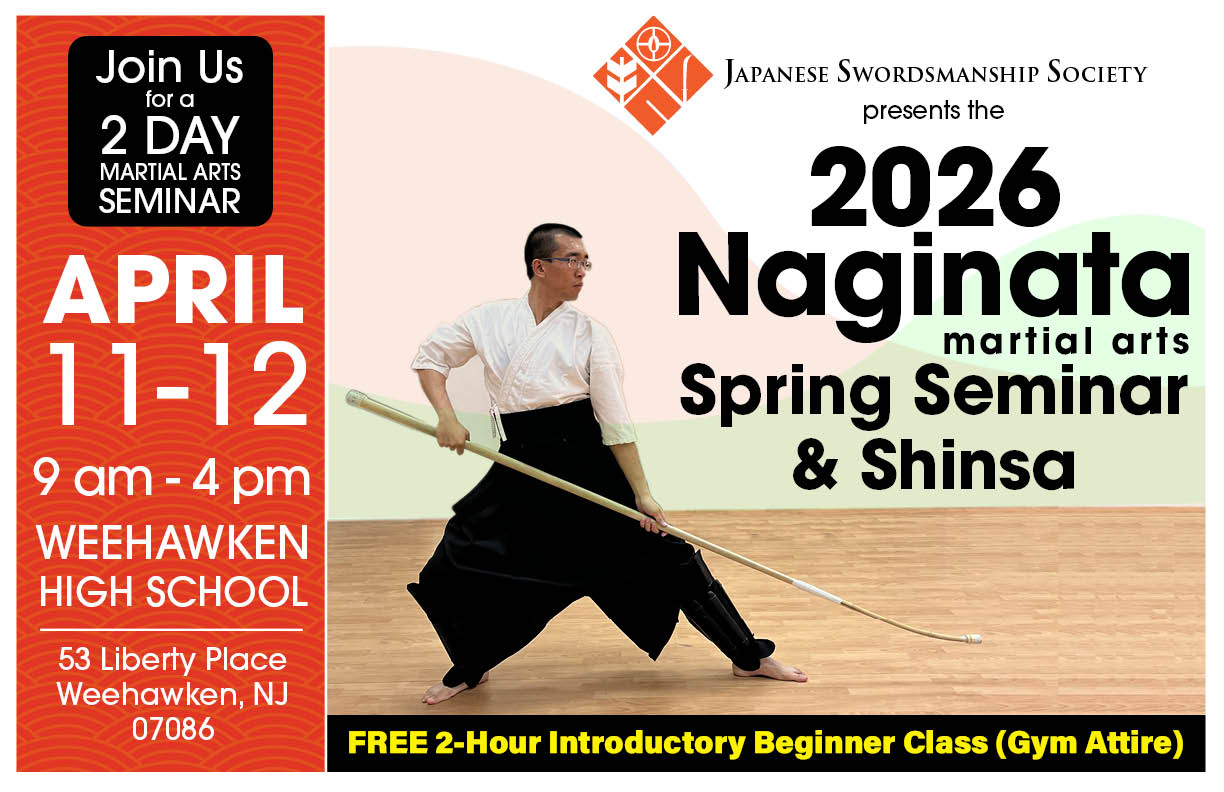
The 2026 Spring Seminar and Shinsa is April 11-12th at Weehawken High School in Weehawken, NJ. Sign up to attend here!
Find current news on our Facebook page: Japanese Swordsmanship Society or on Instagram.
Instructors
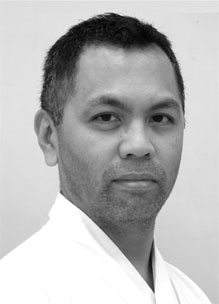 Ellery Engalla has been practicing naginata since 2000 and holds the rank of 5-dan. Along with this title, Mr. Engalla held the rank of 3-dan in Kendo under the late Ishizuka Mozart sensei (Eastern United States Kendo Federation) and Iaido (2-dan) under the late John Prough sensei (Japanese Swordsmanship Society -Nichibukan Iaido). Mr. Engalla serves as the head instructor of Nichibukan.
Engalla-sensei has been a member of two regional naginata federations (ECNF & GNYNF), as well as belonging to the United States Naginata Federation. During the course of his discipline, he had competed in regional and national competitions winning several first place titles both in the men’s individuals and men’s team matches. In the 2003 World’s Naginata Taikai, he won first place for the United States in the Friendship Competition of the men’s dangai competitions. To date,this has not been reached by the U.S. In the 2007 World’s Naginata Taikai, he was part of the U.S. Naginata Men’s Team, the team winning second place.
Engalla-sensei serves as head instructor of Nichibukan Naginata and technical advisor to the Mount Holyoke Naginata Club (Kachimushi), Mr. Engalla brings decades of experience and passion to every class.
Administratively, Mr. Engalla served as Recording Secretary for the United States Naginata Federation for two terms until 2011. From 2015 to 2020, he led the East Coast Naginata Federation as its president, guiding a diverse and growing community of dojos and study groups stretching along the east coast of the United States from Massachusetts to Puerto Rico. His work has helped expand access to naginata while fostering a stronger sense of connection among practitioners nationwide and internationally.
Continuing the legacy of his late teacher, Sachiko Yamauchi-Prough (Kyoshi), Mr. Engalla is deeply committed to making naginata more accessible while staying rooted in its traditional budo spirit, beyond its sporting aspects. Through disciplined training in both fundamentals and advanced techniques, he inspires his students to cultivate inner strength, resilience, and spirit. His goal is to mentor and prepare senior students to become qualified instructors and examiners, ensuring the art of naginata continues to thrive for generations to come.
 Rebecca Pomeroy has been a practitioner of naginata since 2011 and holds the rank of 4-dan. Rebecca began her practice under the late Sachiko Yamauchi-Prough (Kyoshi) at Mount Holyoke College with the Kachimushi Naginata Club. She now practices under Ellery Engalla sensei (5-dan) at the Nichibukan Naginata Dojo in New Jersey, under the umbrella of the Japanese Swordsmanship Society (JSS). Ms. Pomeroy serves as the assistant instructor of Nichibukan.
On the continuing course of her naginata journey, Ms. Pomeroy has competed in regional and national competitions placing first in both individuals and team. Her dedication, commitment and successes have garnered her a place in the USA Women’s Individuals at the World Naginata Championships in 2019 and 2024 and, in addition, has competed in the Engi-Kyogi (forms) with her colleague and engi partner Jessica Espinosa (4-dan, University of Connecticut naginata instructor of Kamakiri Naginata Club).
Rebecca Pomeroy had previously served as Recording Secretary in the United States Naginata Federation (2018-2020) and currently serves as the Administrative Secretary for the East Coast Naginata Federation. From 2023-2025, Ms. Pomeroy was elected as president for the East Coast Naginata Federation.
Ms. Pomeroy teaches middle school Latin and elective courses in central New Jersey. She holds a B.A. in Classics from Mount Holyoke College in Massachusetts, as well as a Masters of Teaching in Latin and Classical Humanities from UMass, Amherst. Her experience includes teaching middle school, high school, and undergraduate students. She considers teaching to be her calling, and expands her teaching practice to Naginata as well.
What is Naginata?
The naginata (なぎなた, 薙刀), lit. ‘mowing sword’) is a polearm and one of several varieties of traditionally made Japanese blades (nihontō). Naginata were originally used by the samurai class of feudal Japan, as well as by ashigaru (foot soldiers) and sōhei (warrior monks). The naginata is the iconic weapon of the onna-musha, a type of female warrior belonging to the Japanese nobility. A common misconception is that the Naginata is a type of sword, rather than a polearm.
A naginata consists of a wooden or metal pole with a curved single-edged blade on the end; it is similar to the Chinese guan dao or the European glaive. Similar to the katana, naginata often have a round handguard (tsuba) between the blade and shaft, when mounted in a koshirae (furniture). The 30 to 60 cm (12 to 23.5 in) naginata blade is forged in the same manner as traditional Japanese swords. The blade has a long tang (nakago) which is inserted in the shaft.
The naginata used in atarashii naginata (新しいなぎなた), the shiai-yo, has an oak shaft and a bamboo “blade” (habu). It is used for practice, forms competitions, and sparring. It is between 210 and 225 cm (83 and 89 in) in length and must weigh over 650 g (23 oz). The “blade” is replaceable. They are often broken or damaged during sparring and can be quickly replaced, being attached to the shaft with tape.
The naginata used by koryū practitioners has an oak shaft and blade, carved from a single piece of wood, and may incorporate a disc-shaped guard (tsuba). It is called a kihon-yo. (Definition excerpt from Wikipedia*)
Comparison of Naginata

Uniform and Equipment for Naginata Practice
Uniform (Keiko-gi and Hakama)
For regular practice and events, practitioners typically wear a white keiko-gi (training jacket) paired with a white obi (belt) and a dark blue or black hakama—with black being the preferred color. A complete uniform set (keiko-gi, obi, and hakama) can range in cost from $100 to $200 or more, depending on quality and vendor.
Beginners do not need to purchase a full uniform immediately; simple athletic wear is sufficient to start. When wearing a keiko-gi, the standard obi color is white. The color holds no rank or symbolic significance, but should be neutral and not clash with the rest of the uniform.
Protective Gear (Bogu)
Bogu, or protective armor, is required for those who wish to participate in shiai (sparring competitions). Naginata bogu is similar to kendo equipment and includes:
- Do (breastplate) and tare (waist protector), identical to kendo
- Men (helmet), has a slightly shorter and forward-angled shoulder flaps (men-dare) with diagonal stitching
- Kote (gloves), which feature individual three-section fingers — unlike kendo’s mitten style
- Suneate (shin guards - greaves), unique to naginata, for protecting the lower legs
Standard bogu sets are available for under $500, while high-end or custom-made armor can cost up to a thousand dollars depending on craftsmanship and materials. Bogu is not required at the beginner level and is usually introduced around the 1-kyu level, just before black belt. Your instructor will advise you when you’re ready to begin training with bogu.
Atarashii Naginata
Students begin training with an Atarashii Naginata, a practice weapon priced around $130–$200.
Advanced practitioners who study classical kata forms (such as Tendo Ryu, Jikishinkage Ryu, or Buko Ryu) may invest in specialized kata naginata, which typically cost between $200 and $300.
Getting Started
You don't need to purchase everything at once. Most gear is introduced gradually based on your level and progress, as determined by your instructor. Start with a willingness to learn—equipment can come later.
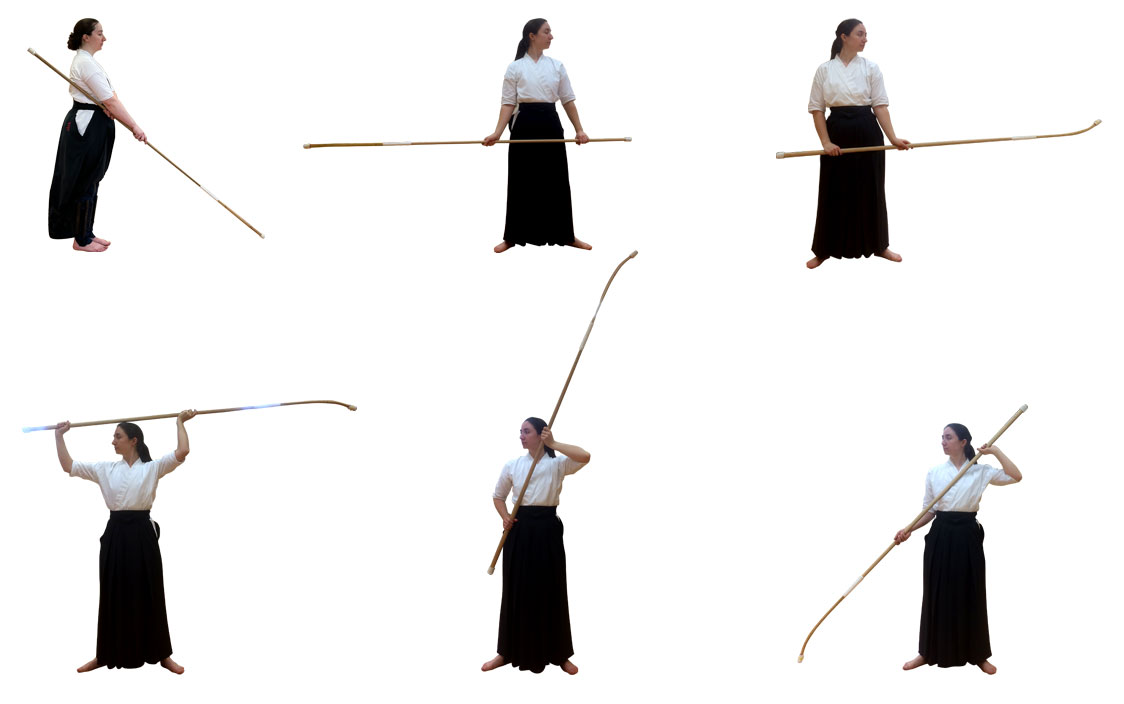
Basic Postures (Kamae)
Sachiko Yamauchi (Prough) Sensei
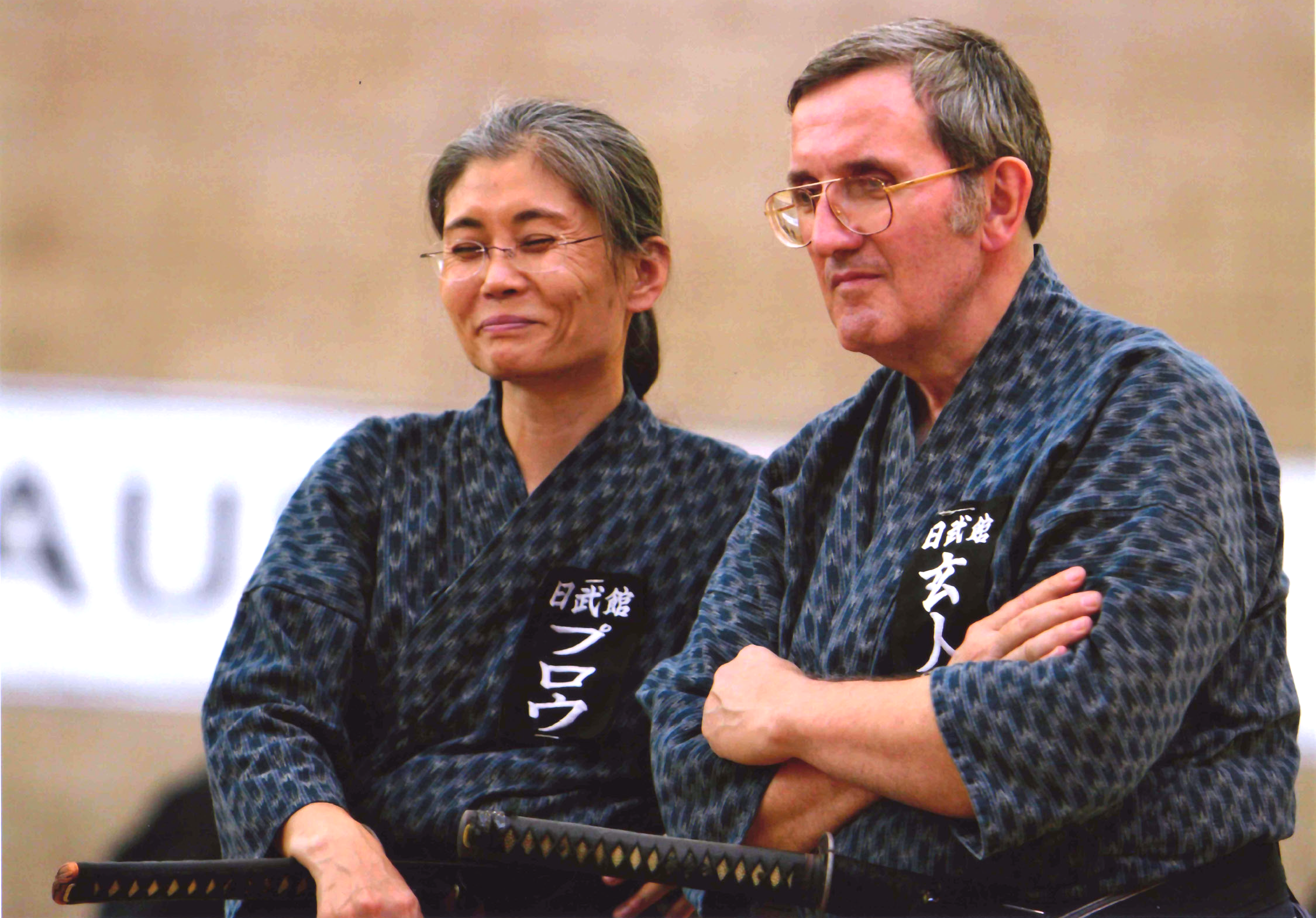
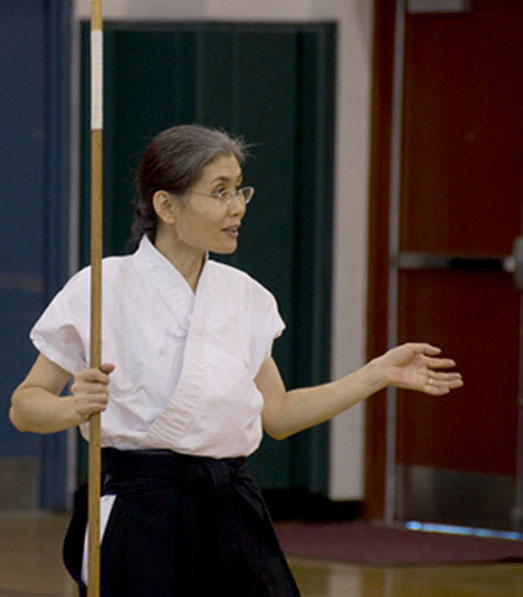 Sachiko Yamauchi (Prough) Sensei (1959–2012) was a fierce and passionate practitioner whose life was deeply shaped by the art of Naginata. Her journey began in 1971 as a young student at the Naginata Club of Matsuyama Shinonome Junior High School on Shikoku, Japan. By the age of 16, she had already achieved the rank of Shodan, and in 1996, she became the youngest person at that time to be promoted to Kyoshi—a senior instructor rank that spoke to her skill, dedication and years of tireless training.
As a competitor, Yamauchi Sensei was bold and fearless. Her tournament record was remarkable: she claimed national titles as a high school student, university athlete, and adult competitor. But she wasn’t just a champion on the floor — she also gave back to the community through leadership roles in the Matsuyama City Sports Association, the Ehime Naginata Federation, the All Japan College Naginata Federation and more.
In 1999, she moved to the United States and married John Prough, an Iaido instructor and founder of the Japanese Swordsmanship Society. Together, they shared a life immersed in budo. In addition to continuing her own Naginata practice, she earned the rank of Yondan in Iaido while living in the U.S.
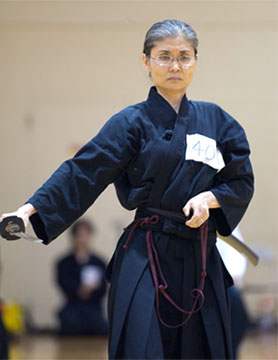 Yamauchi Sensei quickly became one of the driving forces behind the growth of Naginata in America, particularly the east coast. She founded Nichibukan Naginata (her home dojo) in New Jersey and New York and was a frequent guest instructor at seminars across the country and abroad. Her impact was deeply felt at places like Mount Holyoke College and Kearny High School, where she led and mentored young practitioners. She also helped nurture early naginata communities in Canada through the East Coast Naginata Federation (ECNF).
From March 2008 to January 2012, she served as president of the United States Naginata Federation, guiding with the same integrity she brought to the dojo.
"Everything is a part of training, from breathing to walking."
Known for her firm, no-nonsense demeanor, Yamauchi Sensei also had a deep belief in the transformative power of training. With every bow, every strike, she called them to be present. To move with intention. To train with heart. To adhere to reiho. To her, martial arts was not a hobby but a way of life.
Tragically, she passed away on January 5, 2012, just days after suffering a sudden aneurysm on New Year’s Day. She was 52. Her passing left a profound void in the martial arts community.
Yamauchi Sensei is remembered as a devoted teacher, a trailblazer, and a guiding light for many. Her legacy lives on through the students she trained—some of whom now carry on her teachings as instructors and mentors themselves.
She was predeceased by her father, Moriaki Yamauchi, and followed a year later by her husband, John Prough (d. 2013). She is survived by her mother Chieko Yamauchi, sister Miwa Shigematsu and the extended family of martial artists she inspired across two continents.